Despite Santa Claus's mixed Christian roots, he has become a secular representation of Christmas. As such, some Protestants dislike the secular focus on Santa Claus and the materialist focus that gift giving brings to the holiday. Such a condemnation of Christmas is not a 20th century phenomenon, but originated among some Protestant groups of the 16th century and was prevalent among the Puritans of 17th century England and colonial America who banned the holiday as either pagan or Roman Catholic. Christmas was made legal with the Restoration but the Puritan opposition to the holiday persisted in New England for almost two centuries.
Excerpt from Josiah King's The Examination and Tryal of Father Christmas (1686), published shortly after Christmas was reinstated as a holy day in England. Folger Shakespeare Library, Washington, D.C.


 Following the Restoration of the monarchy and with Puritans out of power in England,[88] the ban on Christmas was satirized in works such as Josiah King's The Examination and Tryal of Old Father Christmas; Together with his Clearing by the Jury
Rev. Paul Nedergaard, a clergyman in Copenhagen, Denmark, attracted controversy in 1958 when he declared Santa to be a "pagan goblin" after Santa's image was used on fund-raising materials for a Danish welfare organization . One prominent religious group that refuses to celebrate Santa Claus, or Christmas itself, for similar reasons is the Jehovah's Witnesses.A number of denominations of Christians have varying concerns about Santa Claus, which range from acceptance to denouncement.





Some Christians prefer the holiday focus on the actual birth of Jesus, believing that Christmas stemmed from pagan festivals such as the Roman Saturnalia and Germanic Yule that were subsumed within ancient Christianity. An even smaller subset of Reformed Christians actually prefer the secularized version of the holiday for the same reasons, believing that to relegate Christ's birth to Christmas is wrong.
Excerpt from Josiah King's The Examination and Tryal of Father Christmas (1686), published shortly after Christmas was reinstated as a holy day in England. Folger Shakespeare Library, Washington, D.C.
Following the Restoration of the monarchy and with Puritans out of power in England,[88] the ban on Christmas was satirized in works such as Josiah King's The Examination and Tryal of Old Father Christmas; Together with his Clearing by the JuryRev. Paul Nedergaard, a clergyman in Copenhagen, Denmark, attracted controversy in 1958 when he declared Santa to be a "pagan goblin" after Santa's image was used on fund-raising materials for a Danish welfare organization . One prominent religious group that refuses to celebrate Santa Claus, or Christmas itself, for similar reasons is the Jehovah's Witnesses.A number of denominations of Christians have varying concerns about Santa Claus, which range from acceptance to denouncement.
Some Christians prefer the holiday focus on the actual birth of Jesus, believing that Christmas stemmed from pagan festivals such as the Roman Saturnalia and Germanic Yule that were subsumed within ancient Christianity. An even smaller subset of Reformed Christians actually prefer the secularized version of the holiday for the same reasons, believing that to relegate Christ's birth to Christmas is wrong.
Post Title
→Christmas Santa was prevalent among the Puritans of 17th century England
Post URL
→http://christmas-holly.blogspot.com/2011/11/christmas-santa-was-prevalent-among.html
Visit Christmas Holly for Daily Updated Wedding Dresses Collection





 There is also a city named North Pole in Alaska where a tourist attraction known as the "Santa Claus House" has been established. The US postal service uses the city's zip code of 99705 as their advertised postal code for Santa Claus. A Wendy's in North Pole, AK has also claimed to have a "sleigh fly through".
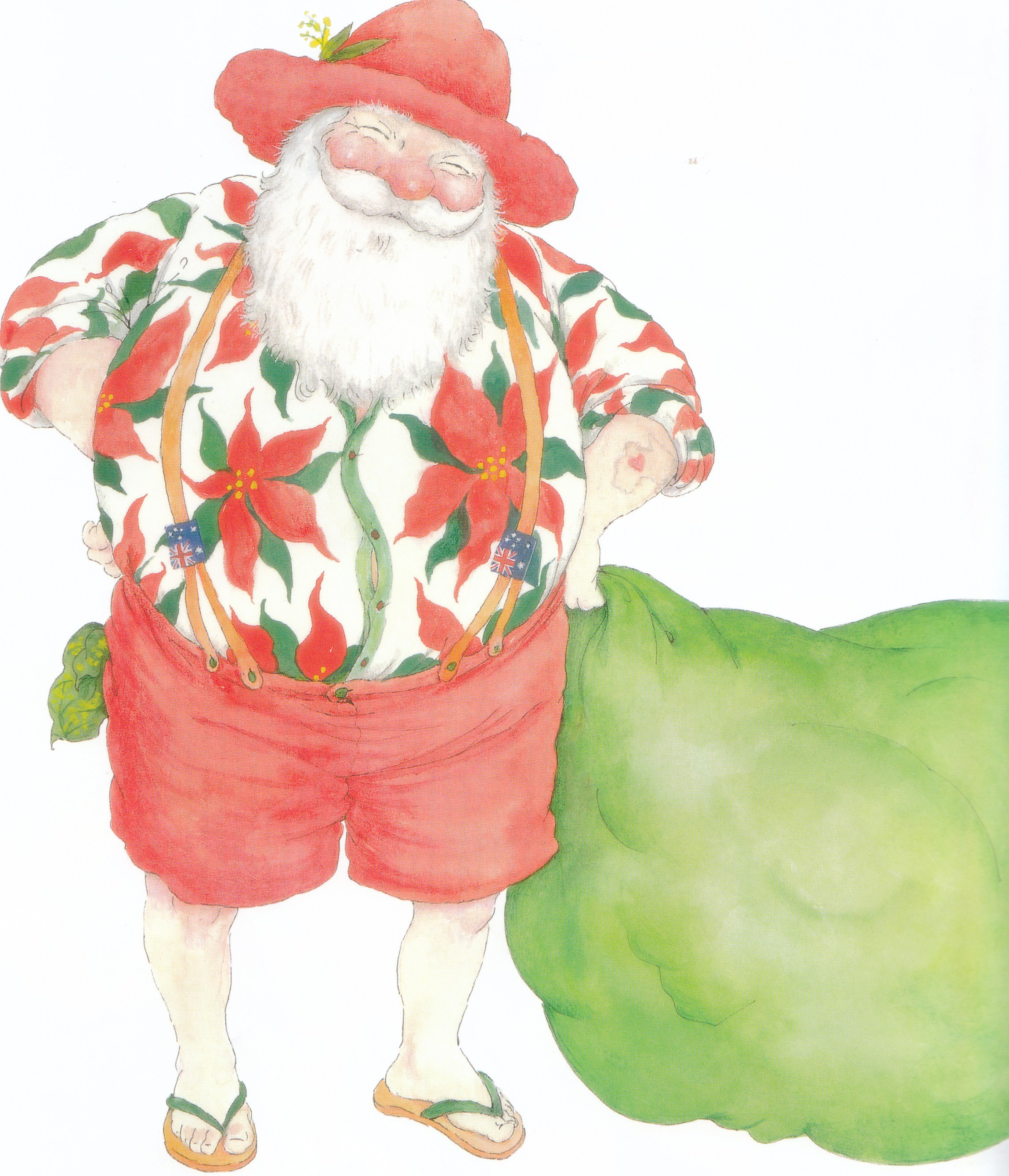
.jpg "christmas santa claus-37")

 Images of Santa Claus were popularized through Haddon Sundblom's Further depiction of him for The Coca-Cola Company's Christmas advertising in the 1930s. The popularity of the image spawned urban legends That Santa Claus was invented by Coca-Cola Company or That Santa wears red and white are the colors Because They Used to Promote the Coca-Cola brand.Historically, Coca-Cola was not the first software drink company to Utilize the modern image of Santa Claus in its advertising - White Rock Beverages Already had a red and white overused Santa to sell mineral water in 1915 and then in advertisements for its ginger ale in 1923.In fact, Santa Claus had appeared Already in red and white on the cover of Puck magazine at the start of the century.

 The image of Santa Claus as a benevolent character Became reinforced with its association with charity and philanthropy, Particularly by Organizations Such As the Salvation Army. Volunteers dressed as Santa Claus Typically Became part of fundraising drives to aid needy families at Christmas time.
 The 1956 popular song by George Melachrino, "Mrs.. Santa Claus", and the 1963 children's book How Mrs.. Santa Claus Saved Christmas, by Phyllis McGinley, Helped standardize and Establishing the role and character of Mrs.. Claus in the popular imagination.

 Seabury Quinn's 1948 novel Roads draws from historical legends to tell the story of Santa and the origins of Christmas. Other modern additions to the "story" of Santa include Rudolph the Red-Nosed Reindeer, the 9th and lead reindeer immortalized in a Gene Autry song, written by a Montgomery Ward copywriter.


 In tegenstelling tot Santa Claus, Sint-Nicolaas is een oudere man, elegant en serieus met witte haren en baard lang en vol. Hij draagt een lange rode jas of een kazuifel over de albe en stal traditionele rood witte loper soms plaats een rode tulband, en heeft een gouden staf, een lange ceremoniële staf herder met een elegant gekrulde top. Hij draagt een groot boek dat vertelt of ieder kind is goed of slecht in het afgelopen jaar. Traditioneel rijdt op een wit-grijs. In Nederland en België het karakter van Santa Claus, bekend als Kerstman in het Nederlands ("Christmas man") en Père Noël ("Father Christmas"), in het Frans.


 Numerous parallels have been drawn between Santa Claus and the figure of Odin, chief god among the Germanic peoples prior to their Christianization. Since many of these elements are not related to Christianity, there are theories about the pagan origin of the rites of the festival is derived from the areas where the Germanic peoples were Christianized and retained elements of their indigenous traditions, surviving in the various ways in modern representations of Santa Claus.

 Odin was sometimes recorded in the native Germanic holiday of Yule, as leading a great hunting party through the books sky.Two of Iceland, the Poetic Edda, compiled in the 13th century from earlier sources, and the Prose Edda written in the 13 century by Snorri Sturluson, describe Odin as riding an eight-legged horse called Sleipnir that could leap great distances, leading to comparisons to Santa Claus reindeer.Further, Odin was referred to by many names in skaldic poetry, some of which describe his appearance or functions. These include Síðgrani, Síðskeggr, Langbarðr (all meaning "long beard") and Jólnir.
  According to some traditions, the children began to put my boots, filled with carrots, straw, or sugar, near the chimney for Odin's flying horse, Sleipnir, to eat. [Citation needed] Odin then reward the children for their kindness by replacing Sleipnir's food with gifts or candy. This practice still exists in Germany, Belgium and the Netherlands and was associated with St. Nicholas from the Christianization. In other countries, has been replaced by the hanging of stockings by the fireplace at home.


 From pre-Christian traditions of the Alps and the influence of later Christianization, the Krampus is represented as a companion of Saint Nicholas. Traditionally, some young people dressed as the Krampus in the first two weeks of December and in particular on the night of December 5 and roam the streets frightening children (and adults) with rusty chains and bells.


